Hunting the Kentucky Goatman Beneath the Trestle


There’s something about a railroad trestle at dusk that feels like a dare.
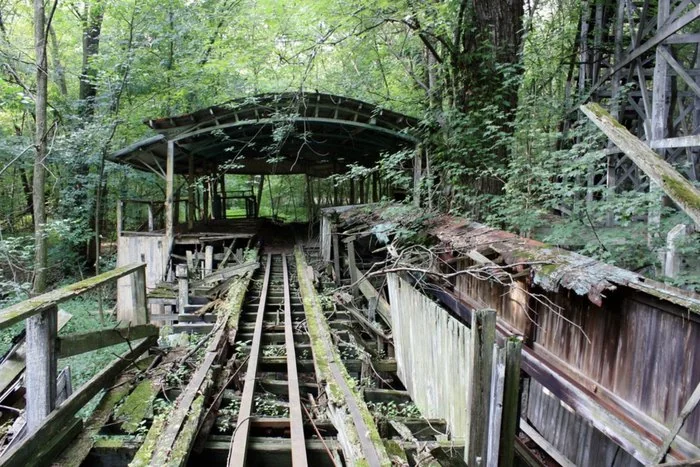
Ninety feet above a quiet Kentucky creek, wooden beams stretch across open air, steel rails humming faintly as trains barrel through without warning. The structure is skeletal, exposed, indifferent to human miscalculation. And in Louisville, that trestle carries a name that has echoed through decades of whispered warnings and late-night dares: the Pope Lick Monster.
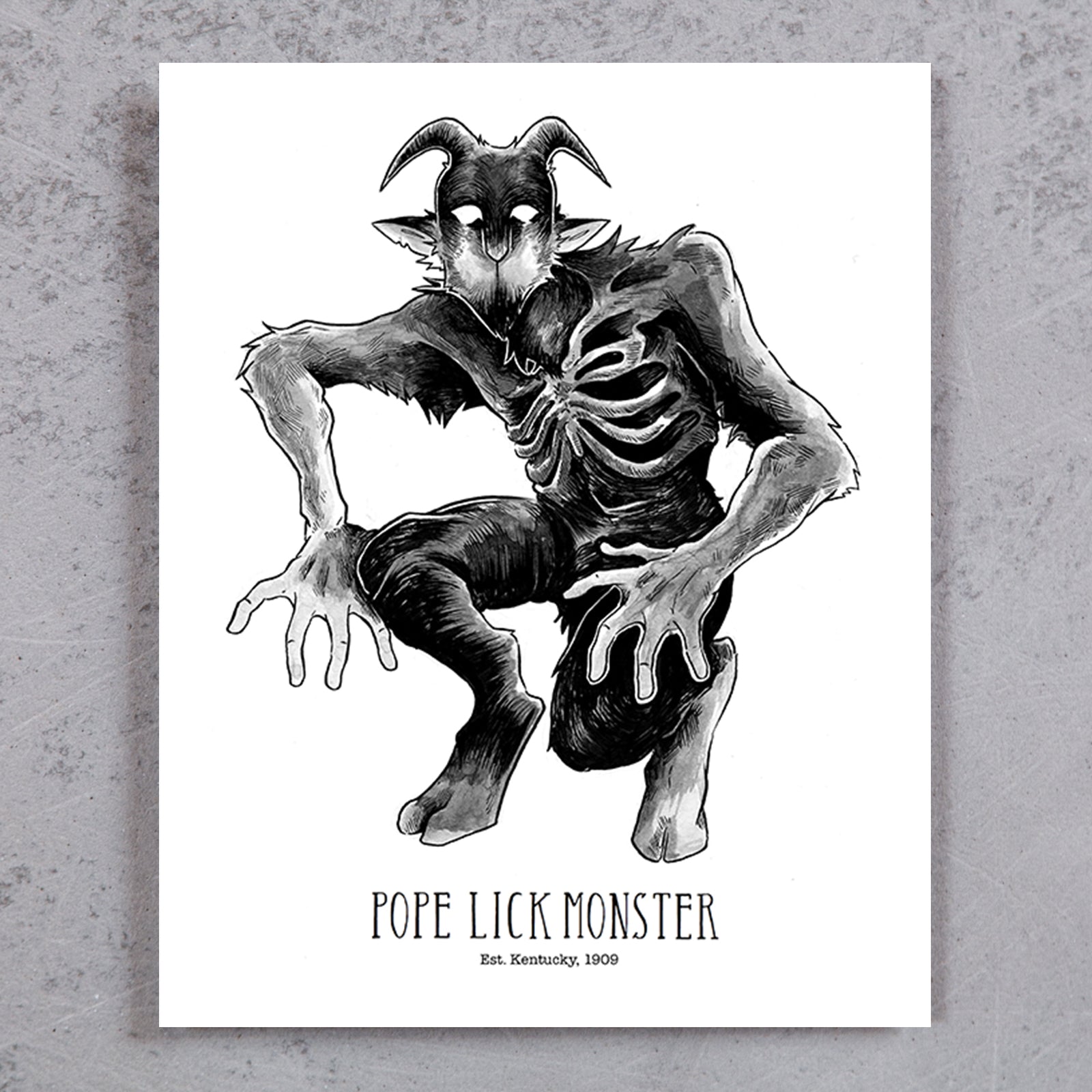
Also known as the Kentucky Goatman, this cryptid is said to be a half-man, half-goat creature that haunts the Pope Lick Trestle over Pope Lick Creek. According to urban legend, it doesn’t simply stalk. It lures. It mimics voices. It hypnotizes. It coaxes the curious onto the active tracks of a Norfolk Southern Railway line—where the real danger needs no supernatural assist.
This is not just another campfire story. The Pope Lick Monster legend has teeth. And tragedy.
Let’s go investigating.
The Anatomy of a Monster
Descriptions of the Goatman vary, but a pattern emerges. Witnesses claim a towering hybrid figure: goat legs ending in cloven hooves, dark fur matted along a muscular frame, pale or grayish human-like skin across the torso, and horns curling from its skull. Some versions give it glowing eyes. Others insist it carries a blood-stained axe.
It’s part satyr, part demon, part Appalachian fever dream.
In American folklore, hybrid creatures often symbolize boundary zones—the thin places where wilderness presses against civilization. The Goatman stands precisely at such a threshold: a man-made trestle over a creek, industrial steel slicing through wooded Kentucky land.
Monsters love liminal spaces. So do legends.
The Origin Stories (Because Every Monster Needs One)
No cryptid survives without a good backstory, and the Pope Lick Monster has several—each stranger than the last.
One tale claims the Goatman was a circus sideshow performer—a “half-man, half-goat” attraction—whose train derailed near Pope Lick Creek. Survivors mocked him. He fled into the woods, embittered, vowing revenge on passing trains and anyone foolish enough to cross his path.
Another story is more Faustian. A local farmer, desperate for success, allegedly made a pact with the devil. When the bill came due, he was transformed into a monstrous goat-man hybrid, condemned to haunt the trestle.
Then there’s the mad scientist version. A shadowy experiment in genetic manipulation produces a hybrid creature that escapes into the Kentucky night. This explanation feels more modern—our anxieties shifting from Satanic bargains to lab-grown horrors.
None of these accounts have evidence. All of them persist.
That’s how folklore works. It mutates. It adapts. It reflects the fears of its era.
The Hypnosis Claim
The most chilling detail of the Pope Lick legend isn’t its appearance—it’s the alleged method.
Stories say the Goatman can hypnotize victims or mimic the voices of friends and family, drawing them onto the trestle. Once on the narrow walkway, escape becomes nearly impossible when a train approaches. There is little room to move. No safe shoulder. No time.
Voice mimicry is a fascinating folkloric element. Across cultures, creatures that imitate human speech—like certain forest spirits in European tales—represent deception and misplaced trust. In reality, of course, trains do not require hypnosis to kill.
Curiosity is enough.
The Real Danger: Steel, Height, and Momentum
The Pope Lick Trestle is not an abandoned relic. It is an active railway line owned by Norfolk Southern Railway.
Climbing it is trespassing. More importantly, it is lethally dangerous.
Over the years, multiple fatalities have occurred on or near the trestle. In 2016, a young woman searching for the Pope Lick Monster was struck and killed by a train. Others have died attempting to cross or explore the structure.
There is no need to invoke hooves or horns to explain these tragedies. A train moving at speed cannot stop quickly. A 90-foot drop leaves no margin for error. Wood ties spaced inches apart create trip hazards. Darkness hides depth perception.
The trestle is the monster.
And yet—humans are story-making creatures. We rarely leave raw danger alone. We narrativize it.
The Goatman Festival and Cultural Echoes
Legends that endure tend to become cultural artifacts. In Louisville, the Goatman has inspired storytelling events, haunted attractions, and even the annual Goatman Festival, celebrating local folklore.
Urban legends create identity. They give a place texture. You can live in a city for years and know nothing about its ghost stories. But once you hear them, the geography changes. A trestle is no longer just infrastructure. It’s narrative terrain.
The Goatman has also appeared in films, books, and countless online forums. The digital age has amplified the legend. What once traveled by whispered dares now spreads by algorithm.
Folklore used to require a campfire. Now it needs Wi-Fi.
The Real-Life “Goatman”
Every good legend brushes against reality somewhere.
Some researchers suggest the Pope Lick Monster may have been loosely inspired by a real man: Charles McCartney, sometimes known as “The Goatman.” He traveled the country in the mid-20th century with a wagon pulled by goats, preaching and selling postcards. He occasionally camped in Kentucky.
McCartney was eccentric. He wore long hair and a beard. He lived outdoors. In an era suspicious of outsiders, that was enough to spark rumor.
There is no evidence linking him directly to the trestle legend. But folklore has a habit of grafting itself onto memorable characters. The leap from “odd man with goats” to “half-goat monster” is smaller than we like to admit.
The Psychology of the Goatman
Let’s zoom out.
Why do Goatman stories flourish in places like Louisville?
Because the setting is perfect. You have:
– A dramatic physical structure
– Real documented fatalities
– Restricted access (which increases allure)
– A wooded, semi-rural environment
– Decades of retellings
Add teenage dares and late-night exploration, and you have a legend incubator.
Urban legends often function as cautionary tales. “Don’t go there. Don’t trespass. Don’t wander onto active train tracks.” Wrapping the warning in a horned monster makes it sticky. Memorable. Repeatable.
In that sense, the Goatman may be a public safety announcement wearing hooves.
There’s also the deeper symbolic layer. The Goatman is a hybrid. A boundary creature. Neither fully human nor fully animal. In folklore, hybrids represent chaos at the edges of order. They embody what happens when lines blur.
And a trestle is literally a line—steel rails drawn through landscape.
The symbolism writes itself.
So… Does the Pope Lick Monster Exist?
As investigators—real or armchair—we ask: What is the evidence?
There are no verified photographs. No biological samples. No credible eyewitness reports that withstand scrutiny. No physical traces consistent with a half-human, half-goat entity.
There are, however, documented train schedules. Engineering diagrams. Coroner’s reports.
Extraordinary claims require extraordinary evidence. The Goatman offers extraordinary claims. The evidence remains stubbornly ordinary.
From a scientific standpoint, the probability of a surviving, undiscovered, large mammalian hybrid haunting a specific trestle in Louisville is vanishingly small. Biology does not casually produce human-goat chimeras wandering the Kentucky woods. Evolution is wild, but it is not whimsical.
Which leads us to a likely conclusion:
The Pope Lick Monster probably does not exist.
But the legend absolutely does.
And in a strange way, that might be more interesting.
Why the Legend Lives On
Stories endure because they do work.
The Goatman keeps people talking. It draws tourists. It gives Louisville a mythic wrinkle. It channels adolescent risk-taking into narrative form. It turns a dangerous structure into a symbolic threshold.
It also reminds us that humans are not purely rational creatures. We crave mystery. We lean into the uncanny. We look at a dark trestle at dusk and feel something ancient stir—the sense that maybe, just maybe, something is watching.
That sensation is older than railroads. Older than Kentucky. Older than written language.
The Pope Lick Monster may not roam the tracks. But the psychological space it occupies—the borderland between danger and imagination—is very real.
And as long as trains thunder across that 90-foot-high trestle over Pope Lick Creek, as long as someone dares someone else to climb it, as long as darkness falls and stories are told—
The Goatman will wait in the shadows.
Not because he exists.
But because we do.